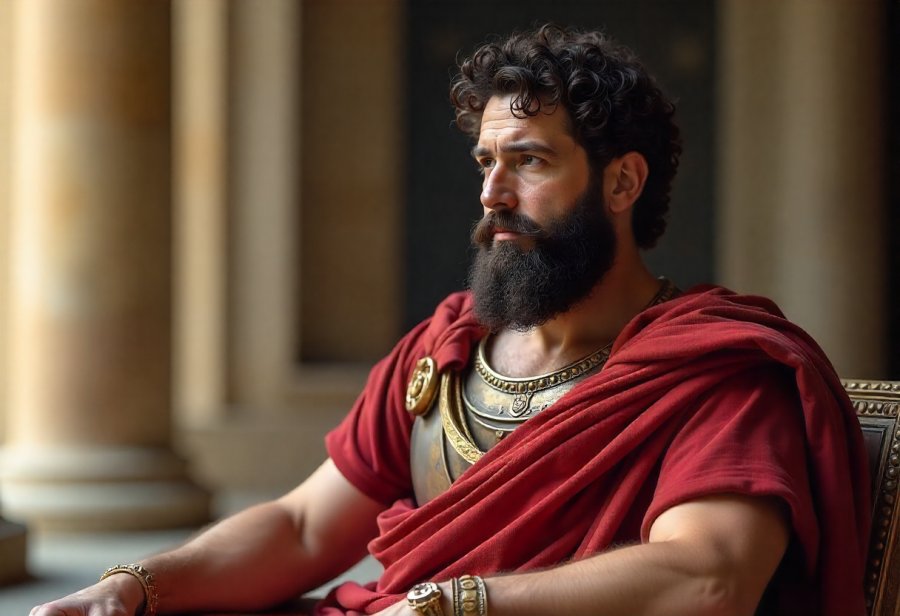
Galileo Galilei’s groundbreaking discoveries revolutionized our understanding of the universe, challenging centuries of accepted wisdom rooted in tradition and religious dogma. His telescopic observations revealed moons orbiting Jupiter and phases of Venus, directly contradicting the geocentric model endorsed by the church, and prompting a profound scientific shift. But was his relentless pursuit of truth also a form of rebellion, making him a martyr for progress? His defiance against authority, risking persecution and trial, exemplifies courage that transcended science—fueling debates about science and faith that persist today. Galileo’s unwavering commitment to empirical evidence laid the foundation for modern scientific methods and inspired future generations to question, explore, and challenge entrenched power. His story is a compelling reminder that true progress often begins with resistance—raising the enduring question: in standing against dogma, do we forge the path to enlightenment?
Galileo’s Bold Revolution: Challenging Ancient Wisdom and Religious Authority
Galileo Galilei stands as one of history’s most influential figures in science, not just for his groundbreaking discoveries but for his unwavering willingness to challenge deeply held beliefs. His work shifted humanity’s understanding of the cosmos, replacing the old Earth-centered view with a dynamic, law-governed universe. With telescopic observations, he revealed moons orbiting Jupiter and the phases of Venus—findings that directly contradicted centuries of accepted wisdom rooted in Aristotelian philosophy and church doctrine. These revelations did more than add new facts; they questioned the authority of ancient texts and religious teachings, sparking a scientific revolution that would forever change how we see our place in the universe.
But Galileo’s boldness didn’t come without cost. His defiance of tradition and authority made him a controversial figure in his time. While today he’s celebrated as a hero of progress, his actions were seen as rebellious and dangerous by those in power. He openly challenged the authority of the church, which supported a geocentric worldview that placed Earth at the universe’s center. His promotion of heliocentrism, supported by empirical evidence, clashed directly with biblical interpretations and the church’s teachings. This conflict set the stage for his famous trial and house arrest, highlighting the risks he took in pursuit of truth.
Galileo’s story is more than a scientific saga; it’s a testament to courage. His insistence on empirical evidence and direct observation represented a radical shift from relying on ancient authority. When he published his telescopic findings, he was effectively challenging centuries of dogma and the divine order upheld by religious authorities. His refusal to back down, even when faced with persecution, made him a symbol of intellectual independence—someone who prioritized discovery over conformity.
His resistance reshaped the relationship between science and religion, sparking debates that continue to this day. Galileo’s courage inspired future generations to question authority and pursue knowledge with resilience. His life exemplifies how progress often begins with confrontation—when individuals dare to challenge entrenched power structures, they open the door to new understanding. Galileo’s legacy endures as a reminder that the pursuit of truth sometimes requires standing firm against the forces that seek to silence it.
Foundations of Courage: Galileo’s Early Life and the Birth of a Scientific Rebel
Galileo Galilei was born in Pisa in 1564, into a family that valued music and medicine. From a young age, he displayed a natural curiosity about the world, especially in mathematics and natural philosophy. His early education laid the foundation for a lifelong fascination with understanding how things work, which would eventually lead him to challenge long-standing ideas about the universe. Before Galileo’s time, most thinkers believed in a universe centered around Earth—a view rooted in Aristotelian philosophy and reinforced by the church’s teachings.
At that era, the dominant model was geocentric, placing Earth at the universe’s center with celestial bodies moving in perfect circles around it. This view wasn’t just scientific; it was deeply woven into religious doctrine and societal norms. Scholars relied heavily on ancient texts and authorities, often dismissing direct observation in favor of accepted wisdom. Challenging this established order was risky and rare, as it threatened both academic reputation and church authority.
Galileo’s early years were marked by a keen interest in mathematics, which he pursued through self-study and formal education. His fascination grew as he read classical works and experimented with ideas about nature. He eventually became a university professor, emphasizing observation and experimentation over reliance on ancient texts—a revolutionary approach at the time, when most science depended on centuries-old authority.
His groundbreaking discoveries began with a simple telescope, which he improved himself. Using it, he observed moons orbiting Jupiter and saw that Venus displayed phases—findings that directly challenged the geocentric model. These observations suggested that not all celestial bodies revolved around Earth, a radical shift in understanding. They also demonstrated that the universe was more complex and dynamic than previously believed, paving the way for Copernicus’ heliocentric theory.
Supporting the Sun-centered model put Galileo at odds with the Catholic Church. Initially, he faced little resistance, but as his observations gained prominence, religious authorities grew uneasy. His advocacy for heliocentrism was seen as a challenge to biblical interpretations and divine order. This tension culminated in his trial in 1633, where he was forced to recant and placed under house arrest, highlighting the risks he faced for daring to challenge tradition.
Defying Dogma: How Galileo Challenged Tradition and Sparked a Scientific Awakening
Galileo’s scientific work was more than just about making discoveries; it was a deliberate act of defiance against centuries of tradition and authority. By emphasizing direct observation, experimentation, and mathematical evidence, he challenged the reliance on ancient texts and church doctrines that had long dictated what was accepted as truth. His use of the telescope to reveal moons orbiting Jupiter and the phases of Venus directly contradicted the geocentric worldview endorsed by both religious and academic institutions. These findings not only questioned the authority of Aristotle and Ptolemy but also threatened the divine order the church upheld. Galileo’s willingness to publish and defend these discoveries made him a symbol of scientific independence, risking censure and persecution to push the boundaries of human understanding.
Galileo revolutionized science by shifting the focus from authority-based knowledge to empirical evidence. His approach prioritized observation and measurement, breaking away from the dogma that had constrained scientific inquiry for centuries. When he presented his telescopic observations in the *Sidereus Nuncius* in 1610, he was openly challenging the centuries-old worldview that Earth was the center of everything. His advocacy for heliocentrism, which placed the Sun at the center of the solar system, was a direct confrontation with the church’s literal interpretation of scripture and the traditional authority of classical thinkers. This stance made him a target for accusations of heresy, but Galileo persisted, driven by a conviction that truth should be based on evidence, not dogma.
Galileo’s direct opposition to authority is most clear in how he defended his findings publicly. Despite warnings from church officials, he continued to promote heliocentrism and publish his observations. His 1616 letter to the Grand Duchess Christina argued that Scripture should not be used to contradict scientific evidence, a bold stance that challenged the church’s authority to interpret divine texts. When he published the *Dialogue Concerning the Two Chief World Systems* in 1632, he was openly defending heliocentrism, which led to his trial and subsequent house arrest. His refusal to back down in the face of powerful opposition exemplifies his unwavering commitment to scientific truth over institutional authority.
Galileo’s resistance was not just about scientific facts; it was a challenge to the very foundations of religious and academic power. His persecution by the church transformed him into a symbol of intellectual courage and the fight for freedom of thought. Despite enduring trial, forced recantation, and confinement, his unwavering dedication to empirical evidence earned him admiration beyond his lifetime. His suffering was seen by many as the price of truth, and his example inspired future generations to question authority and pursue knowledge with resilience. He became a martyr for progress, embodying the idea that challenging dogma is often necessary to advance human understanding.
Today, Galileo’s defiance continues to resonate as a powerful reminder of the importance of questioning authority and standing up for scientific integrity. His methods—centered on careful observation, systematic experimentation, and mathematical analysis—remain fundamental to scientific progress. His story encourages us to embrace curiosity and resilience, even when confronting entrenched power structures. Galileo’s life shows that challenging tradition and authority can be risky, but it’s often the only way to foster true progress and expand our understanding of the universe.
Breaking Barriers: The Far-Reaching Impact of Galileo’s Courage on Science and Society
Galileo’s defiance of established authority reshaped the course of science in profound ways. His emphasis on observation and empirical evidence laid the groundwork for the modern scientific method, transforming science from a reliance on ancient texts into a dynamic pursuit driven by discovery and proof. By openly challenging long-held beliefs, he sparked a wave of inquiry that encouraged future scientists to question accepted wisdom and seek answers through systematic experimentation. This shift not only advanced astronomy but also fostered a broader culture of skepticism and independent thinking that persists today.
His clashes with the church intensified the debate over science and religion, highlighting the tension between faith-based doctrine and evidence-based inquiry. Galileo’s support for heliocentrism directly challenged biblical interpretations, sparking a confrontation that symbolized the struggle between divine authority and scientific progress. His trial and condemnation became emblematic of the resistance faced by innovators, but they also prompted ongoing discussions about how science and faith can coexist. Over time, this dialogue contributed to a more nuanced understanding that values both spiritual belief and empirical investigation.
Society’s view of authority and knowledge shifted as Galileo refused to accept censorship or silence. His unwavering stance demonstrated that courageous questioning and perseverance could challenge entrenched institutions. His example inspired a broader movement toward individual inquiry and intellectual freedom, laying the groundwork for Enlightenment ideals centered on reason and human rights. The discoveries Galileo made—such as moons orbiting Jupiter and phases of Venus—undermined the geocentric model, revealing a universe more complex and dynamic than previously imagined. These revelations ignited a scientific revolution that fundamentally altered our cosmological understanding.
Galileo’s impact extended beyond astronomy, influencing how society perceives progress and authority. His willingness to risk personal reputation and safety for the sake of truth exemplified the importance of resilience in the face of opposition. This attitude fostered a culture that champions questioning norms and seeking knowledge beyond conventional limits. His life became a symbol of intellectual bravery, inspiring generations to challenge dogma and pursue innovation—even when faced with significant obstacles.
The enduring legacy of Galileo’s defiance is a testament to the power of individual courage in shaping history. His methods—focused on careful observation, measurement, and reasoning—remain central to scientific inquiry today. By pushing the boundaries of what was accepted, he not only advanced our understanding of the universe but also challenged societal structures that sought to control how truth was discovered and shared. His story reminds us that progress often begins with resistance, and that questioning authority is essential for true advancement.
Today, Galileo’s influence is evident in the ongoing pursuit of knowledge and the ongoing debate over the relationship between science and religion. His life exemplifies that challenging entrenched power can lead to revolutionary change, encouraging a mindset of resilience, curiosity, and integrity. His legacy continues to inspire scientists, thinkers, and ordinary people to stand up for evidence and reason, ensuring that the quest for understanding remains a vital part of human progress.
Legacy of Resistance: Galileo’s Enduring Influence and the Power of Questioning Authority
Today, Galileo’s legacy continues to symbolize the power of scientific bravery and the importance of questioning authority. Modern scientists and educators often cite him as a pioneer whose methods—focused on careful observation, systematic experimentation, and mathematical reasoning—lay the foundation for today’s scientific practices. His story inspires ongoing debates about the relationship between science and religion, highlighting the need for intellectual freedom and open inquiry in the pursuit of truth.
In popular culture, Galileo is celebrated as a hero who challenged powerful institutions to seek knowledge. Films, documentaries, and educational programs portray him as a figure of resilience and curiosity, emphasizing that questioning dogma—even at great personal risk—can lead to breakthroughs that benefit society. These stories reinforce the idea that progress often demands courage and a willingness to stand against entrenched norms. His image as a martyr for progress encourages people to value skepticism, resilience, and independent thinking.
Galileo’s groundbreaking astronomical discoveries, such as Jupiter’s moons and Venus’s phases, revolutionized our understanding of the cosmos. These findings provided concrete proof against the geocentric view and supported heliocentrism, laying the groundwork for modern astronomy. Today’s researchers continue to test hypotheses through observation and measurement—methods Galileo championed—demonstrating how curiosity and systematic investigation remain central to scientific discovery.
His life also serves as a reminder that challenging established norms can be controversial. While some critics argue that his confrontational approach caused unnecessary conflict, most acknowledge that his defiance pushed society toward a more evidence-based understanding of the universe. Galileo’s perseverance in the face of opposition exemplifies how questioning authority is vital for societal progress, inspiring scientists and thinkers to pursue truth despite obstacles.
Furthermore, Galileo’s influence extends beyond science into the broader cultural and philosophical landscape. His courage to stand firm against censorship and dogma helped foster a culture that values inquiry and individual rights. His legacy encourages ongoing efforts to protect academic freedom and resist suppression of new ideas, ensuring that the pursuit of knowledge remains resilient and open.
In today’s context, Galileo’s story reminds us that scientific progress often begins with resistance. His example inspires a mindset of resilience, curiosity, and integrity—values essential for innovation and discovery. As society continues to grapple with complex questions about the universe, his life exemplifies that standing up for evidence and reason can lead to transformative change.
Ultimately, Galileo’s legacy endures as a testament to the importance of challenging the status quo. His life demonstrates that pushing boundaries and questioning authority are not just acts of rebellion but necessary steps toward understanding the truth. His story continues to motivate scientists, thinkers, and ordinary people alike to pursue knowledge fearlessly, fostering a future where inquiry and progress go hand in hand.