Cleopatra VII is often remembered through Hollywood’s glamorous portrayals—draped in exotic robes and seducing powerful men—but her true legacy lies in her formidable intellect and strategic mastery. Could her greatest power have been her mind rather than her beauty? This revealing portrait uncovers a scholar-queen fluent in multiple languages, deeply engaged in Alexandria’s intellectual pursuits, and adept at blending Egyptian traditions with Hellenistic culture. Her political alliances, especially with Julius Caesar and Mark Antony, were calculated moves rooted in long-term strategy, not vanity. Cleopatra’s leadership was built on cultural diplomacy, scientific curiosity, and diplomatic finesse—traits that enabled her to navigate a turbulent geopolitical landscape and preserve Egypt’s independence. Her story challenges us to look beyond surface images and recognize that true influence stems from wisdom, cultural insight, and adaptability. In an era of shifting power, was Cleopatra’s greatest strength her extraordinary mind?
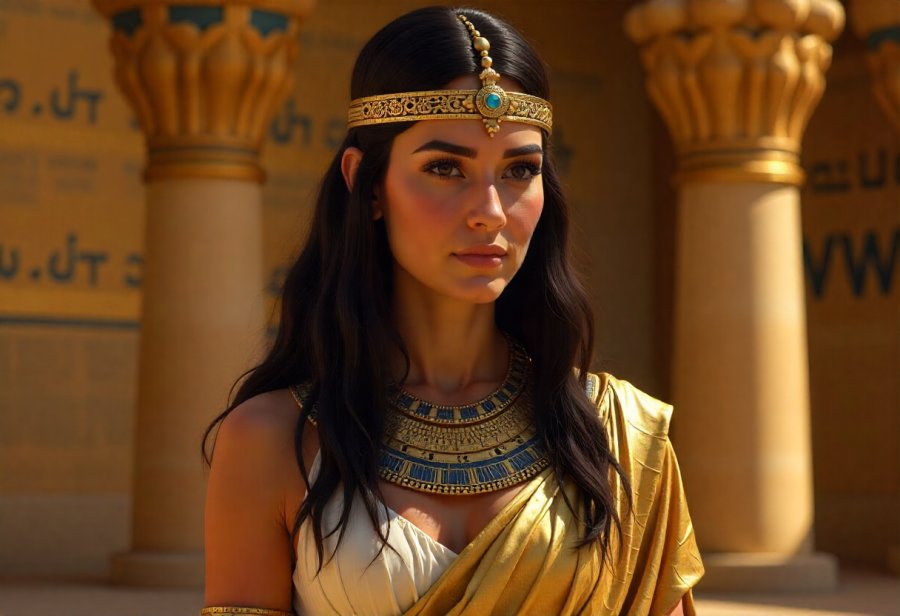
Unveiling Cleopatra: The Brain Behind the Beauty
Cleopatra VII is often remembered through Hollywood’s glamorous portrayals—draped in exotic robes, seducing powerful men, and embodying allure. But behind that polished image lies a far more compelling story: one of a brilliant and strategic ruler whose true strength was her mind. She wasn’t just a beautiful face; she was a highly educated woman, fluent in several languages, and deeply engaged in scholarly pursuits. Her intelligence and diplomatic skills were the real keys to her power, helping her navigate Egypt through a turbulent era.
As the last active pharaoh of Egypt, Cleopatra’s legacy rests on her ability to lead, negotiate, and adapt. She understood that influence extended beyond appearance or charm. Her mastery of statecraft, combined with a keen understanding of political dynamics, made her a formidable figure in a world dominated by military might and shifting alliances. Her relationships with Rome’s most influential figures, like Julius Caesar and Mark Antony, weren’t driven by vanity but by strategic calculations aimed at preserving her kingdom’s independence.
Hollywood has simplified her story into one of seduction and beauty, but Cleopatra was a woman of sharp wit and clever thinking. She studied Egyptian religion and traditions, using her knowledge of culture and symbolism to legitimize her authority. Her ability to forge long-term alliances through diplomacy and cultural insight was rooted in her intelligence, not just charm. Her leadership was a blend of scholarly pursuits, linguistic mastery, and political finesse—traits that helped her maintain power amid external threats and internal rivals.
Her education set her apart from many of her contemporaries. Cleopatra was multilingual, reportedly fluent in at least nine languages, including Egyptian, Greek, and Latin. This skill allowed her to communicate directly with a diverse range of officials, scholars, and foreign diplomats. Her patronage of Alexandria’s famed Library demonstrated her commitment to knowledge and learning, reinforcing her reputation as a ruler who valued wisdom as much as authority.
Egypt’s cultural landscape was complex, and Cleopatra’s ability to embrace both Greek and Egyptian traditions helped her legitimize her rule. She adopted Egyptian religious titles and participated in rituals to connect with her people’s spiritual beliefs. This cultural dexterity was a strategic move, unifying her diverse subjects and reinforcing her role as both a divine and political leader. Her mastery of tradition alongside diplomacy made her a uniquely effective ruler during a time of upheaval.
All these elements—her scholarly pursuits, linguistic talents, cultural understanding, and diplomatic finesse—highlight that Cleopatra’s true strength was rooted in her intellect. Her leadership was built on strategic thinking, cultural insight, and the ability to adapt—traits that made her one of history’s most formidable women. Her story challenges us to look beyond surface appearances and recognize the power of a sharp mind in shaping enduring legacies.
Egypt’s Queen and the Complex Tapestry of Power
Cleopatra VII was born into the Ptolemaic dynasty, a Greek family that inherited Egypt after Alexander the Great’s empire fragmented. Her ancestors, Macedonian generals, established a ruling class that blended Greek customs with traditional Egyptian traditions, creating a unique cultural identity. This dual heritage became a vital asset, allowing her to navigate seamlessly between Greek and Egyptian worlds. She ascended to the throne in 51 BCE at a young age, inheriting a kingdom already riddled with internal rivalries and external threats from expanding Rome.
The Ptolemies governed Egypt with a Greek aristocratic style, but they also adopted Egyptian religious symbols and titles to legitimize their rule among native Egyptians. This fusion of cultures was evident at court, where Greek governance practices coexisted with Egyptian rituals and divine claims. Cleopatra inherited this complex identity, which she skillfully used to strengthen her authority and appeal to a diverse population. Her ability to embody both Greek and Egyptian traditions helped her unify her kingdom during turbulent times.
After her father, Ptolemy XII, died, Cleopatra faced immediate challenges from family members eager to seize power. At just 18, she initially co-ruled with her younger brother, Ptolemy XIII, but internal conflicts quickly erupted. Demonstrating sharp political instincts, Cleopatra mobilized supporters and worked tirelessly to reinforce her authority. Her resilience in overcoming early instability set the stage for her later strategic moves and demonstrated her capacity to lead amid chaos.
Externally, Egypt was caught between the rising influence of Rome and its own ambitions for independence. Cleopatra understood that forging alliances with Rome’s most powerful figures, like Julius Caesar and Mark Antony, was essential for her survival. Her diplomatic skills shone through as she sought to secure her throne and safeguard her kingdom’s sovereignty. Her relationship with Caesar helped her regain control after exile, while her alliance with Antony was a calculated effort to preserve Egypt’s autonomy amid shifting Roman politics.
Throughout her rise, Cleopatra demonstrated a nuanced understanding of her cultural roots and the geopolitical landscape. She embraced Egyptian religious traditions, adopting titles and rituals that linked her to divine authority, while also maintaining Greek practices to legitimize her rule. This cultural diplomacy allowed her to connect with her subjects and reinforce her legitimacy as both a divine and political leader, uniting her diverse people under a common identity.
Her personal relationships were carefully calibrated political strategies rather than mere romance. Her alliance with Julius Caesar was instrumental in restoring her throne, and her partnership with Mark Antony aimed to strengthen Egypt’s position in a turbulent Mediterranean. Cleopatra’s ability to leverage these connections highlights her long-term vision and mastery of influence, showing that her power was rooted in intelligence and strategic thinking.
By the time she solidified her rule, Cleopatra had become a master tactician—resilient, adaptable, and culturally astute. Her rise was driven by more than inheritance; it was fueled by her resilience, her capacity to learn, and her talent for long-term planning. Her leadership demonstrated that true power lay in her mind—her ability to think ahead, manipulate cultural symbols, and forge alliances that ensured her survival.
Her story is a testament to the strength of strategic intelligence in leadership. Cleopatra’s legacy endures because she understood that influence depends on insight, adaptability, and cultural mastery. Her success was built on her capacity to navigate complex human and political currents, making her one of history’s most formidable rulers—proof that in the end, her greatest strength was her mind.
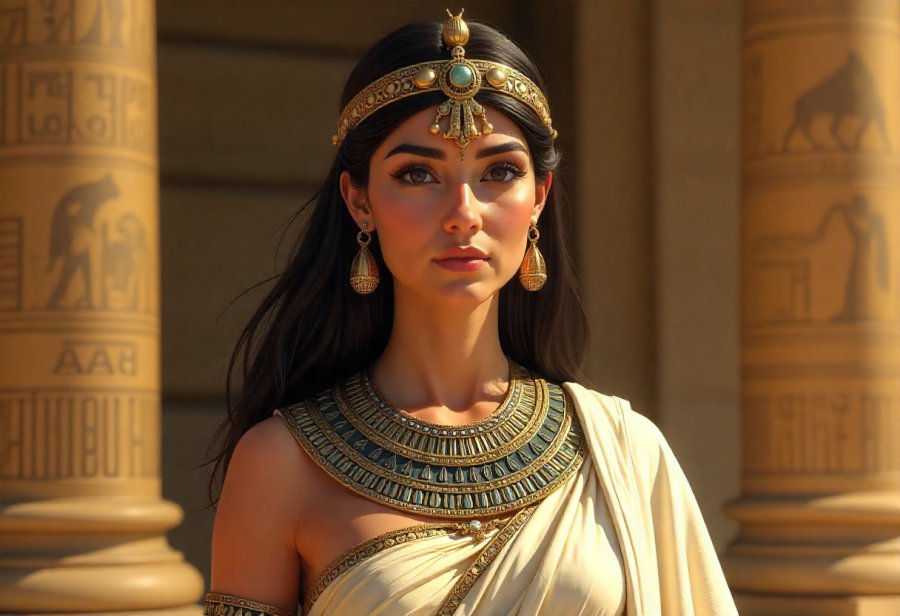
Deciphering Cleopatra’s Intellectual Prowess
Cleopatra’s reputation as an intellectual powerhouse is supported by her extensive scholarly pursuits and extraordinary language skills. Fluent in at least nine languages—including Egyptian, Greek, and Latin—she could communicate directly with officials, scholars, and foreign dignitaries from diverse cultures. This linguistic mastery was more than a personal achievement; it was a strategic asset that allowed her to craft nuanced diplomatic messages, negotiate effectively, and navigate complex political landscapes with confidence. Her ability to speak multiple languages demonstrated her deep commitment to understanding and respecting the cultures she governed and interacted with, giving her a distinct edge in diplomacy.
Her engagement with Alexandria’s famed Library underscores her dedication to knowledge. Cleopatra was not merely a patron but an active participant in scholarly circles, associating with philosophers, scientists, and mathematicians. She immersed herself in the scientific and philosophical advances of her time, integrating new ideas into her governance. Her lifelong interest in astronomy, mathematics, and literature shaped her approach to leadership, rooted in a foundation of knowledge and strategic insight. This intellectual curiosity helped her make informed decisions during turbulent times, reinforcing her reputation as a ruler who valued wisdom.
Beyond language and science, Cleopatra was well-versed in Egyptian religion, politics, and history. She participated in religious rituals and adopted titles that linked her to divine authority, recognizing that cultural and spiritual legitimacy were essential to her rule. Her mastery of tradition, combined with a willingness to embrace innovation, allowed her to unify her diverse subjects. She skillfully used Egyptian symbolism and customs alongside Hellenistic practices to strengthen her legitimacy and connect with her people on a spiritual level.
Her strategic thinking extended into her diplomatic alliances, particularly with Julius Caesar and Mark Antony. These relationships were not based on chance or personal sentiment but were carefully calculated moves to secure Egypt’s independence and expand her influence. Cleopatra understood the importance of reading human nature and leveraging cultural insights—her alliances were long-term investments rooted in her sharp political acumen. Her ability to craft and sustain these relationships highlights her talent for influence and long-term planning.
Throughout her reign, Cleopatra demonstrated that intelligence and cultural insight were her greatest assets. Her mastery of languages, her patronage of Alexandria’s intellectual hub, and her political finesse made her more than a queen—she was a true strategist. Her leadership was driven by a keen mind that could adapt to changing circumstances, innovate, and inspire loyalty through her wisdom. This combination of knowledge and acuity set her apart as one of history’s most formidable rulers.
Her capacity for strategic thought, cultural literacy, and scientific curiosity show that her power stemmed from her mind. Cleopatra’s ability to think several steps ahead, communicate across cultures, and blend tradition with innovation made her a master of influence. Her intelligence was the foundation of her legacy, proving that true leadership relies on wisdom and the capacity to adapt in an ever-changing world.
Legacy of Wisdom: How Cleopatra’s Intelligence Shaped History
Cleopatra’s legacy extends far beyond her image in popular culture. Her ability to navigate a complex geopolitical landscape, forge critical alliances, and maintain Egypt’s independence showcases her exceptional strategic brilliance. Her relationships with Julius Caesar and Mark Antony weren’t driven by personal vanity but were deliberate moves designed to bolster her position and protect her kingdom. These alliances, rooted in careful calculation, exemplify her mastery of influence and diplomacy, proving that her power was rooted in intelligence rather than charm alone.
Her support for Alexandria’s renowned Library and her active engagement with scholars positioned Egypt as a center of knowledge and innovation. By championing learning and patronizing intellectual pursuits, Cleopatra reinforced her image as a ruler who valued wisdom as much as authority. This focus on education and cultural exchange fostered an environment of intellectual growth that outlived her reign, leaving a lasting imprint on Egypt’s reputation as a hub of scholarship and scientific progress.
Culturally, Cleopatra’s talent for blending Egyptian religious traditions with her Greek heritage was a key element of her leadership. She adopted Egyptian titles and rituals that connected her to divine authority, while also upholding Hellenistic customs to legitimize her rule among her Greek-speaking court and allies. This cultural diplomacy unified her diverse subjects and strengthened her legitimacy, demonstrating her ability to adapt and connect across different worlds. Her influence was built on a nuanced understanding of human nature and cultural insight, enabling her to maintain loyalty and stability in turbulent times.
Many focus on her dramatic relationships or her political theatrics, but her true strength lay in her strategic mind. Cleopatra understood that influence depended on long-term vision, cultural literacy, and the ability to leverage her position effectively. Her skill in turning potential threats into opportunities underscores her reputation as a shrewd tactician and a resilient leader. Her legacy proves that leadership rooted in wisdom, adaptability, and deep understanding can leave an enduring mark far beyond the political realm.
Ultimately, Cleopatra’s story reminds us that genuine influence comes from intelligence and insight. Her mastery of language, her patronage of knowledge, and her cultural agility exemplify how a leader’s greatest asset is often their mind. Her ability to think several steps ahead, to blend tradition with innovation, and to inspire loyalty through strategic thinking set her apart as one of history’s most formidable women. Her legacy endures as a testament to the power of the mind in shaping history and inspiring generations.
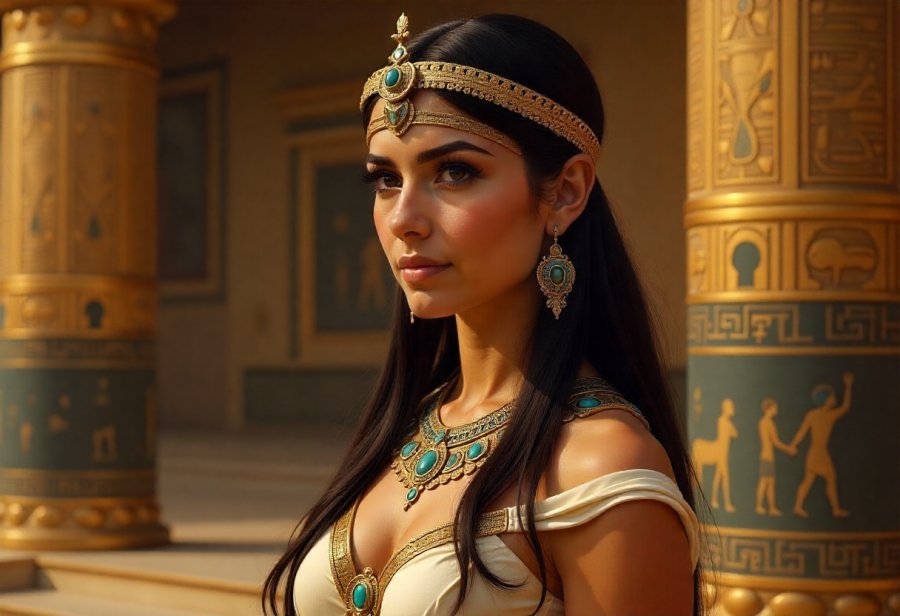
The Mind as Her Greatest Power: Cleopatra’s Enduring Influence
Cleopatra’s true strength was never just her beauty or her relationships; it was her mind. Her intelligence, strategic insight, and cultural fluency allowed her to navigate a world filled with danger, diplomacy, and shifting alliances. These qualities enabled her to maintain power and influence far beyond what superficial charm could achieve. She saw long-term consequences clearly and crafted calculated moves that kept her one step ahead of her rivals.
Her mastery of languages and her active engagement with Alexandria’s legendary Library exemplify her dedication to knowledge. Being fluent in multiple tongues gave her the ability to communicate directly with diverse leaders, scholars, and diplomats, turning language into a powerful tool for influence. This commitment to learning was more than personal pride—it was a strategic advantage that shaped her leadership and decision-making.
Culturally, Cleopatra’s skill lay in blending Egyptian traditions with Hellenistic practices, reinforcing her legitimacy and connecting with her people on a spiritual level. By adopting Egyptian titles and rituals, she linked herself to divine authority, while her Greek heritage provided a foundation of political credibility with her court and allies. This cultural dexterity helped unify her kingdom’s diverse population and solidify her authority amid turbulent times.
Her relationships with Julius Caesar and Mark Antony weren’t mere personal attachments—they were carefully calibrated political strategies. Cleopatra understood that influence depended on foresight, negotiation, and the ability to turn alliances into long-term assets. Her ability to leverage these connections demonstrated her mastery of influence and her capacity to adapt her strategy to changing circumstances.
Her legacy endures because she exemplified that leadership rooted in wisdom, cultural insight, and strategic thinking can leave a lasting impact. Cleopatra knew that influence is built on understanding human nature and applying knowledge effectively. Her story reminds us that true power comes from the mind—an asset more enduring than beauty or charm.
In the end, Cleopatra’s greatest achievement was her ability to think several steps ahead. Her leadership was a testament to the fact that intelligence and insight are the most vital tools for shaping history. Her influence continues to inspire those who believe that the strongest leaders are those who master the art of the mind and use it to forge a legacy that withstands the test of time.